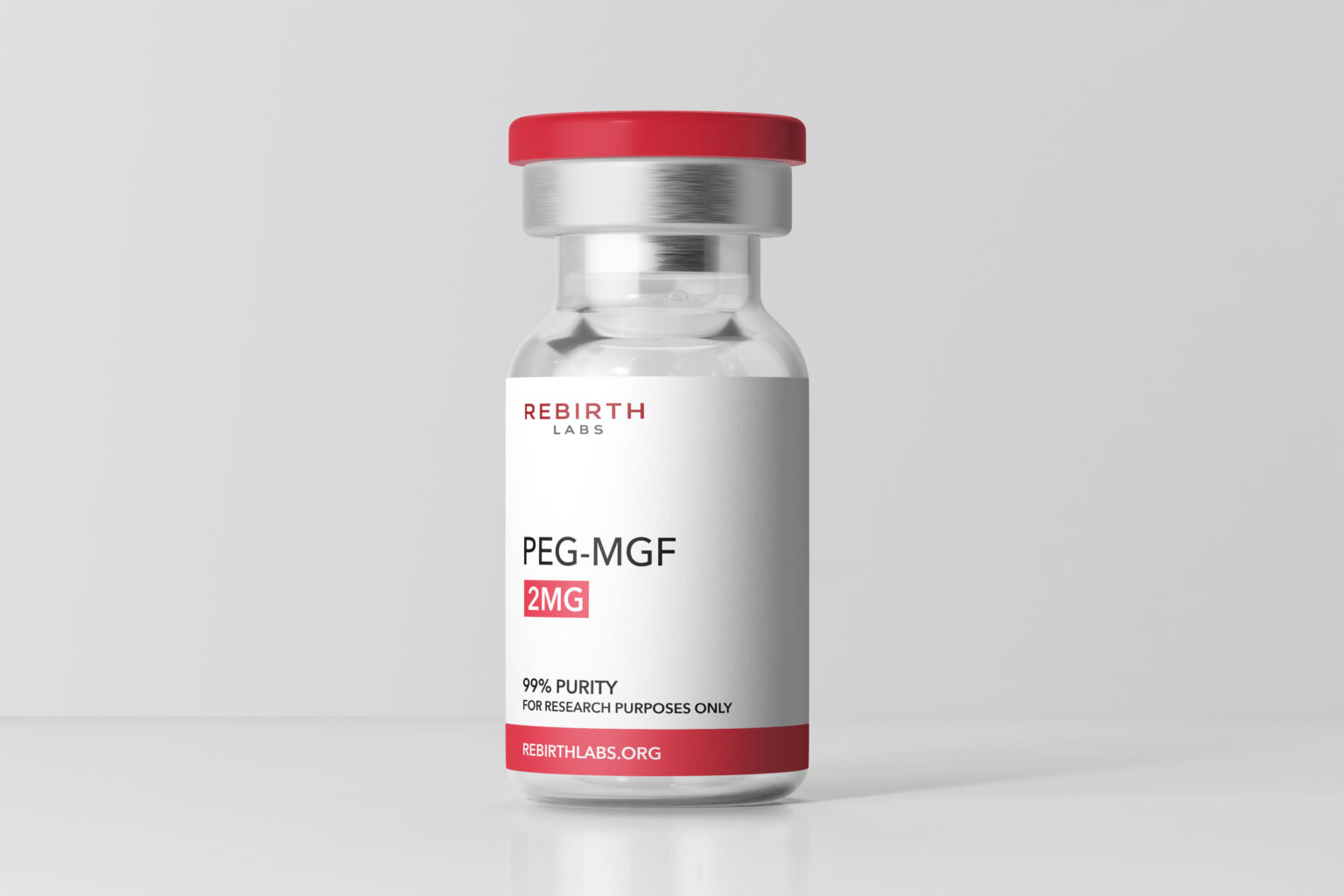
PEG-MGF: Premium Research Peptide Information & Quality Standards at RebirthLab
Introduction
The scientific interest in advanced research peptides has expanded significantly in recent years, especially in the fields of cellular repair, muscle biology, and regenerative studies. Among these compounds, PEG-MGF has gained attention in laboratory and experimental environments for its unique structural properties and potential relevance in growth factor research.
At RebirthLab (https://rebirthlab.org), the focus is on providing high-purity research compounds intended strictly for laboratory and investigative use. This content is designed to offer a detailed, SEO-optimized understanding of PEG-MGF, its scientific background, and its role within controlled research settings.
This article explores its structure, research relevance, comparative biology, quality considerations, and why sourcing from a reputable supplier is essential for consistent laboratory outcomes.
What is PEG-MGF?
PEG-MGF is a modified variant of mechano growth factor (MGF), itself a splice variant of IGF-1 (Insulin-like Growth Factor-1). The “PEG” component refers to polyethylene glycol modification, which is used in research chemistry to extend molecular stability and improve peptide half-life under experimental conditions.
In laboratory research contexts, PEG-MGF is studied for its potential role in cellular signaling pathways, particularly those associated with tissue response mechanisms following mechanical stress. Its modified structure distinguishes it from naturally occurring growth factors by increasing its resistance to rapid enzymatic breakdown.
Researchers often examine PEG-MGF in controlled environments to better understand:
- Cellular regeneration signaling pathways
- Muscle tissue response mechanisms
- Growth factor receptor interactions
- Protein synthesis signaling behavior
It is important to note that all such studies are conducted in vitro or in strictly controlled experimental models, and not intended for therapeutic application outside regulated research.
Molecular Structure and Scientific Significance
From a biochemical perspective, PEG-MGF is engineered by attaching polyethylene glycol chains to the MGF peptide sequence. This modification significantly alters pharmacokinetic behavior in research environments, allowing scientists to observe extended activity windows compared to non-PEGylated analogs.
The significance of this modification lies in:
- Increased molecular stability in solution
- Reduced degradation by proteolytic enzymes
- Extended observation time in experimental models
- Improved consistency in laboratory assays
These properties make PEG-MGF a valuable subject of study in peptide chemistry and cellular biology research.
Research Context and Laboratory Applications
In scientific literature, PEG-MGF is commonly discussed within the broader framework of IGF-1 splice variants and their role in mechanotransduction—the process by which cells convert mechanical stimuli into biochemical responses.
Research applications may include:
- Studying muscle cell adaptation mechanisms
- Investigating protein synthesis signaling pathways
- Exploring tissue repair models in controlled environments
- Evaluating peptide receptor binding affinity
However, it is essential to emphasize that these are strictly experimental applications. PEG-MGF is not approved for medical treatment, diagnostic use, or human consumption outside of research settings.
Stability and Bioavailability in Experimental Models
One of the key reasons PEG-MGF is widely studied is its altered stability profile compared to non-PEGylated peptides. In experimental settings, PEGylation is a well-known strategy used to improve molecular persistence in solution and reduce rapid enzymatic breakdown.
This allows researchers to:
- Conduct longer observation studies
- Reduce variability in peptide degradation rates
- Improve reproducibility of experimental results
- Maintain consistent concentration levels during assays
Such properties make PEG-MGF particularly useful in comparative peptide stability research.
PEG-MGF vs MGF in Scientific Research
A major area of interest in peptide science is the comparison between PEG-MGF and its non-PEGylated counterpart, MGF.
While both originate from the IGF-1 gene expression pathway, they differ significantly in structure and stability:
- MGF is naturally occurring and has a short active duration in biological systems
- PEG-MGF is structurally modified to enhance stability and extend observation time
- MGF is often used for immediate-response signaling studies
- PEG-MGF is preferred in extended kinetic and stability research models
This comparison allows scientists to better understand how molecular modification impacts peptide behavior in controlled environments.
Quality Standards at RebirthLab
At RebirthLab, quality assurance is a core priority in the distribution of research compounds. Each batch is handled under strict internal standards to ensure consistency and traceability for laboratory use.
Key quality principles include:
- Controlled sourcing of raw research materials
- Batch documentation for traceability
- Purity verification through analytical testing methods
- Secure and contamination-controlled handling procedures
The goal is to ensure that researchers working with experimental peptides receive materials suitable for reproducible laboratory outcomes.
Laboratory Testing and Verification
Scientific integrity depends heavily on compound purity and verification. For this reason, research peptides undergo multiple levels of analytical assessment before distribution.
Common verification approaches include:
- High-performance liquid chromatography (HPLC) profiling
- Mass spectrometry confirmation of molecular structure
- Purity threshold analysis
- Stability observation under controlled storage conditions
These processes help ensure that the peptide material meets expected research-grade standards.
Storage and Handling in Research Environments
Proper handling of research peptides is critical for maintaining molecular integrity during experimentation. PEG-MGF, like most peptide-based compounds, requires controlled storage conditions to preserve stability.
General laboratory guidelines include:
- Storage in temperature-controlled environments
- Protection from direct light exposure
- Avoidance of repeated freeze-thaw cycles
- Use of sterile laboratory equipment during handling
These practices are standard in biochemical research environments and help ensure consistent experimental results.
Role in Cellular and Molecular Research
In advanced research settings, PEG-MGF is often studied within the context of cellular communication pathways and mechanotransduction responses. Scientists aim to understand how modified peptides influence receptor signaling and intracellular protein synthesis.
Areas of interest include:
- Growth factor receptor activation pathways
- Gene expression modulation in muscle cells
- Cellular adaptation to mechanical stimuli
- Comparative peptide signaling efficiency
These studies contribute to broader scientific understanding of how growth factors interact with biological systems at the molecular level.
Research Ethics and Intended Use
It is essential to emphasize that PEG-MGF is intended strictly for laboratory research purposes only. It is not classified as a medication or dietary supplement and should not be used outside controlled scientific environments.
Reputable suppliers, including RebirthLab, operate under the principle that all products are:
- Intended for in vitro or non-clinical research
- Not for human or veterinary use
- Distributed in compliance with research chemical guidelines
This ensures that scientific integrity and regulatory standards are maintained.
Why Researchers Source from RebirthLab
Choosing a reliable supplier is critical in peptide research due to the sensitivity of experimental outcomes to compound purity and consistency.
Researchers prefer RebirthLab because of:
- Consistent batch quality control
- Transparent sourcing and documentation
- Reliable analytical verification processes
- Focus on research-grade standards only
Consistency in material quality helps reduce variability in experimental data, which is essential in scientific research.
Storage Stability and Shelf Life Considerations
In peptide research, stability over time is a key factor in experimental planning. PEG-MGF demonstrates improved stability characteristics compared to non-modified peptides due to PEGylation, which reduces degradation rates in controlled environments.
Researchers typically consider:
- Temperature-dependent degradation profiles
- Solution stability under laboratory conditions
- Long-term storage behavior
- Impact of handling frequency on molecular integrity
Understanding these variables helps ensure more accurate experimental design and interpretation.
Comparative Scientific Interest in Growth Factors
Growth factor research continues to be a rapidly evolving field in molecular biology. PEG-MGF is frequently included in comparative studies involving other IGF-1 variants due to its structural modifications.
Key comparative focuses include:
- Signal duration differences
- Receptor binding efficiency
- Stability in biological simulations
- Molecular response variability
Such comparisons help researchers better understand how peptide modifications influence biological signaling systems.
Future Directions in Peptide Research
The field of peptide science is expanding into increasingly sophisticated areas of molecular engineering and cellular signaling analysis. Modified peptides like PEG-MGF are expected to continue playing a role in:
- Advanced regenerative biology models
- Synthetic peptide engineering studies
- Cellular adaptation research
- Growth factor pathway mapping
As analytical technology improves, researchers will gain deeper insights into peptide behavior and molecular interaction mechanisms.
Frequently Asked Questions
What is PEG-MGF used for in research?
PEG-MGF is studied in laboratory environments to analyze growth factor signaling, cellular response mechanisms, and peptide stability under controlled conditions.
Is PEG-MGF a drug or medication?
No. It is strictly a research compound and is not approved for medical or therapeutic use.
Why is PEG-MGF modified with PEG?
PEGylation improves molecular stability, extends half-life in experimental systems, and enhances research consistency.
Where can researchers source high-quality PEG-MGF?
Researchers typically obtain materials from verified suppliers such as RebirthLab to ensure quality and traceability.
Conclusion
PEG-MGF continues to be a subject of scientific interest due to its modified structure, extended stability, and relevance in growth factor research. Its role in experimental models helps researchers better understand cellular signaling, mechanotransduction, and peptide behavior under controlled conditions.
With strict quality control and research-only distribution standards, RebirthLab provides a consistent source of laboratory-grade materials for scientific investigation.
As peptide science evolves, compounds like PEG-MGF will remain central to expanding our understanding of molecular biology and cellular communication systems.
PEG-MGF: Premium Research Peptide Information & Quality Standards at RebirthLab
Introduction
The scientific interest in advanced research peptides has expanded significantly in recent years, especially in the fields of cellular repair, muscle biology, and regenerative studies. Among these compounds, PEG-MGF has gained attention in laboratory and experimental environments for its unique structural properties and potential relevance in growth factor research.
At RebirthLab (https://rebirthlab.org), the focus is on providing high-purity research compounds intended strictly for laboratory and investigative use. This content is designed to offer a detailed, SEO-optimized understanding of PEG-MGF, its scientific background, and its role within controlled research settings.
This article explores its structure, research relevance, comparative biology, quality considerations, and why sourcing from a reputable supplier is essential for consistent laboratory outcomes.
What is PEG-MGF?
PEG-MGF is a modified variant of mechano growth factor (MGF), itself a splice variant of IGF-1 (Insulin-like Growth Factor-1). The “PEG” component refers to polyethylene glycol modification, which is used in research chemistry to extend molecular stability and improve peptide half-life under experimental conditions.
In laboratory research contexts, PEG-MGF is studied for its potential role in cellular signaling pathways, particularly those associated with tissue response mechanisms following mechanical stress. Its modified structure distinguishes it from naturally occurring growth factors by increasing its resistance to rapid enzymatic breakdown.
Researchers often examine PEG-MGF in controlled environments to better understand:
- Cellular regeneration signaling pathways
- Muscle tissue response mechanisms
- Growth factor receptor interactions
- Protein synthesis signaling behavior
It is important to note that all such studies are conducted in vitro or in strictly controlled experimental models, and not intended for therapeutic application outside regulated research.
Molecular Structure and Scientific Significance
From a biochemical perspective, PEG-MGF is engineered by attaching polyethylene glycol chains to the MGF peptide sequence. This modification significantly alters pharmacokinetic behavior in research environments, allowing scientists to observe extended activity windows compared to non-PEGylated analogs.
The significance of this modification lies in:
- Increased molecular stability in solution
- Reduced degradation by proteolytic enzymes
- Extended observation time in experimental models
- Improved consistency in laboratory assays
These properties make PEG-MGF a valuable subject of study in peptide chemistry and cellular biology research.
Research Context and Laboratory Applications
In scientific literature, PEG-MGF is commonly discussed within the broader framework of IGF-1 splice variants and their role in mechanotransduction—the process by which cells convert mechanical stimuli into biochemical responses.
Research applications may include:
- Studying muscle cell adaptation mechanisms
- Investigating protein synthesis signaling pathways
- Exploring tissue repair models in controlled environments
- Evaluating peptide receptor binding affinity
However, it is essential to emphasize that these are strictly experimental applications. PEG-MGF is not approved for medical treatment, diagnostic use, or human consumption outside of research settings.
Stability and Bioavailability in Experimental Models
One of the key reasons PEG-MGF is widely studied is its altered stability profile compared to non-PEGylated peptides. In experimental settings, PEGylation is a well-known strategy used to improve molecular persistence in solution and reduce rapid enzymatic breakdown.
This allows researchers to:
- Conduct longer observation studies
- Reduce variability in peptide degradation rates
- Improve reproducibility of experimental results
- Maintain consistent concentration levels during assays
Such properties make PEG-MGF particularly useful in comparative peptide stability research.
PEG-MGF vs MGF in Scientific Research
A major area of interest in peptide science is the comparison between PEG-MGF and its non-PEGylated counterpart, MGF.
While both originate from the IGF-1 gene expression pathway, they differ significantly in structure and stability:
- MGF is naturally occurring and has a short active duration in biological systems
- PEG-MGF is structurally modified to enhance stability and extend observation time
- MGF is often used for immediate-response signaling studies
- PEG-MGF is preferred in extended kinetic and stability research models
This comparison allows scientists to better understand how molecular modification impacts peptide behavior in controlled environments.
Quality Standards at RebirthLab
At RebirthLab, quality assurance is a core priority in the distribution of research compounds. Each batch is handled under strict internal standards to ensure consistency and traceability for laboratory use.
Key quality principles include:
- Controlled sourcing of raw research materials
- Batch documentation for traceability
- Purity verification through analytical testing methods
- Secure and contamination-controlled handling procedures
The goal is to ensure that researchers working with experimental peptides receive materials suitable for reproducible laboratory outcomes.
Laboratory Testing and Verification
Scientific integrity depends heavily on compound purity and verification. For this reason, research peptides undergo multiple levels of analytical assessment before distribution.
Common verification approaches include:
- High-performance liquid chromatography (HPLC) profiling
- Mass spectrometry confirmation of molecular structure
- Purity threshold analysis
- Stability observation under controlled storage conditions
These processes help ensure that the peptide material meets expected research-grade standards.
Storage and Handling in Research Environments
Proper handling of research peptides is critical for maintaining molecular integrity during experimentation. PEG-MGF, like most peptide-based compounds, requires controlled storage conditions to preserve stability.
General laboratory guidelines include:
- Storage in temperature-controlled environments
- Protection from direct light exposure
- Avoidance of repeated freeze-thaw cycles
- Use of sterile laboratory equipment during handling
These practices are standard in biochemical research environments and help ensure consistent experimental results.
Role in Cellular and Molecular Research
In advanced research settings, PEG-MGF is often studied within the context of cellular communication pathways and mechanotransduction responses. Scientists aim to understand how modified peptides influence receptor signaling and intracellular protein synthesis.
Areas of interest include:
- Growth factor receptor activation pathways
- Gene expression modulation in muscle cells
- Cellular adaptation to mechanical stimuli
- Comparative peptide signaling efficiency
These studies contribute to broader scientific understanding of how growth factors interact with biological systems at the molecular level.
Research Ethics and Intended Use
It is essential to emphasize that PEG-MGF is intended strictly for laboratory research purposes only. It is not classified as a medication or dietary supplement and should not be used outside controlled scientific environments.
Reputable suppliers, including RebirthLab, operate under the principle that all products are:
- Intended for in vitro or non-clinical research
- Not for human or veterinary use
- Distributed in compliance with research chemical guidelines
This ensures that scientific integrity and regulatory standards are maintained.
Why Researchers Source from RebirthLab
Choosing a reliable supplier is critical in peptide research due to the sensitivity of experimental outcomes to compound purity and consistency.
Researchers prefer RebirthLab because of:
- Consistent batch quality control
- Transparent sourcing and documentation
- Reliable analytical verification processes
- Focus on research-grade standards only
Consistency in material quality helps reduce variability in experimental data, which is essential in scientific research.
Storage Stability and Shelf Life Considerations
In peptide research, stability over time is a key factor in experimental planning. PEG-MGF demonstrates improved stability characteristics compared to non-modified peptides due to PEGylation, which reduces degradation rates in controlled environments.
Researchers typically consider:
- Temperature-dependent degradation profiles
- Solution stability under laboratory conditions
- Long-term storage behavior
- Impact of handling frequency on molecular integrity
Understanding these variables helps ensure more accurate experimental design and interpretation.
Comparative Scientific Interest in Growth Factors
Growth factor research continues to be a rapidly evolving field in molecular biology. PEG-MGF is frequently included in comparative studies involving other IGF-1 variants due to its structural modifications.
Key comparative focuses include:
- Signal duration differences
- Receptor binding efficiency
- Stability in biological simulations
- Molecular response variability
Such comparisons help researchers better understand how peptide modifications influence biological signaling systems.
Future Directions in Peptide Research
The field of peptide science is expanding into increasingly sophisticated areas of molecular engineering and cellular signaling analysis. Modified peptides like PEG-MGF are expected to continue playing a role in:
- Advanced regenerative biology models
- Synthetic peptide engineering studies
- Cellular adaptation research
- Growth factor pathway mapping
As analytical technology improves, researchers will gain deeper insights into peptide behavior and molecular interaction mechanisms.
Frequently Asked Questions
What is PEG-MGF used for in research?
PEG-MGF is studied in laboratory environments to analyze growth factor signaling, cellular response mechanisms, and peptide stability under controlled conditions.
Is PEG-MGF a drug or medication?
No. It is strictly a research compound and is not approved for medical or therapeutic use.
Why is PEG-MGF modified with PEG?
PEGylation improves molecular stability, extends half-life in experimental systems, and enhances research consistency.
Where can researchers source high-quality PEG-MGF?
Researchers typically obtain materials from verified suppliers such as RebirthLab to ensure quality and traceability.
Conclusion
PEG-MGF continues to be a subject of scientific interest due to its modified structure, extended stability, and relevance in growth factor research. Its role in experimental models helps researchers better understand cellular signaling, mechanotransduction, and peptide behavior under controlled conditions.
With strict quality control and research-only distribution standards, RebirthLab provides a consistent source of laboratory-grade materials for scientific investigation.
As peptide science evolves, compounds like PEG-MGF will remain central to expanding our understanding of molecular biology and cellular communication systems.


Reviews
There are no reviews yet.