
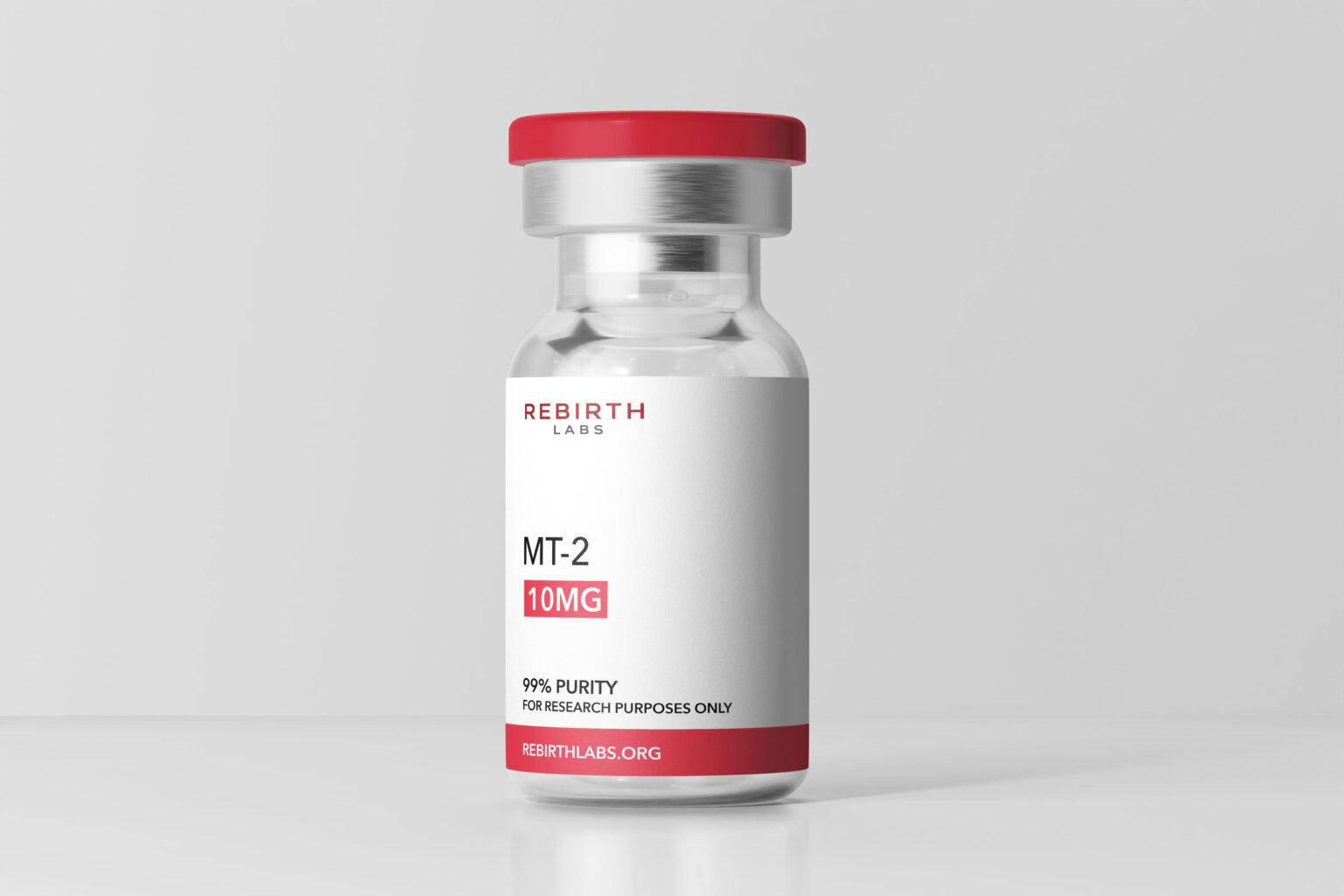
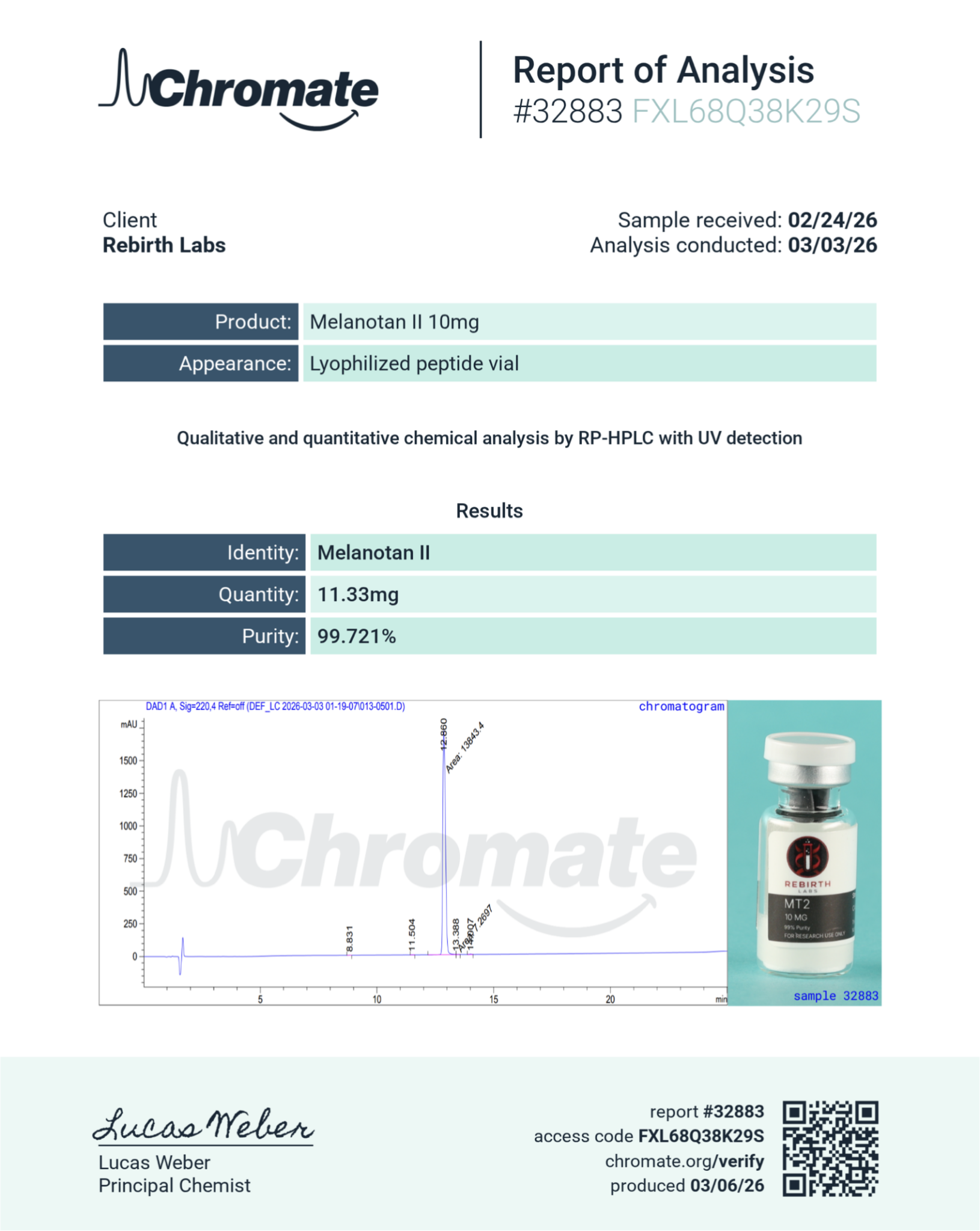
MT-2 (Melanotan II) Research Overview – Informational Guide by RebirthLab
Introduction
The compound known as MT-2 has gained attention in various online research and peptide discussion communities due to its association with pigmentation-related biological pathways and experimental studies in peptide science. At RebirthLab (https://rebirthlab.org), we focus on presenting structured, educational, and research-oriented information to help users better understand compounds discussed in modern biochemical and peptide research environments.
MT-2 is often referenced in scientific discussions related to melanocortin pathways, which are involved in pigmentation, energy balance, and certain physiological signaling processes. However, it is important to understand that much of the interest in this compound comes from experimental and non-clinical contexts, and scientific consensus regarding its long-term effects in humans is still limited.
This comprehensive guide is designed to provide an in-depth, SEO-optimized educational overview of MT-2, including its background, theoretical mechanisms, research interest, safety considerations, and frequently asked questions.
Understanding MT-2 in Scientific Context
MT-2 (Melanotan II) is a synthetic peptide originally studied for its interaction with melanocortin receptors. These receptors are part of a broader biological system involved in multiple physiological processes such as pigmentation regulation, appetite signaling, and energy homeostasis.
The peptide gained attention in experimental research due to its ability to interact with melanocortin receptors in laboratory studies. Researchers have explored its molecular behavior to better understand how receptor activation influences pigmentation-related responses in biological systems.
At RebirthLab, we emphasize that MT-2 should be understood strictly within a research and informational framework. It is not an approved therapeutic substance in many jurisdictions, and its applications remain a subject of ongoing scientific discussion.
Historical Background and Development of MT-2
The development of melanocortin-based peptides began with the study of alpha-melanocyte-stimulating hormone (α-MSH), a naturally occurring peptide involved in pigmentation processes. Scientists later developed analogs such as MT-2 to explore how modifications to peptide structure might influence receptor activity.
Early research into MT-2 was largely focused on its binding affinity to melanocortin receptors and its potential to replicate or modify certain biological signaling pathways observed in natural peptides. Over time, interest expanded beyond academic laboratories into broader public discussion, particularly in online peptide communities.
Despite this interest, it is essential to highlight that research findings remain limited in scope, and comprehensive clinical validation is still lacking.
Molecular and Biological Mechanisms (Theoretical Overview)
The biological interest in MT-2 stems from its interaction with melanocortin receptors, particularly MC1R and MC4R. These receptors are involved in signaling pathways that regulate pigmentation and other physiological functions.
When studied in controlled laboratory environments, MT-2 has been observed to bind to these receptors, triggering downstream signaling activity. This has made it a subject of interest in understanding receptor-ligand interactions and peptide signaling behavior.
However, it is critical to note that most available data comes from experimental models, and extrapolation to human biological outcomes should be approached cautiously.
The study of MT-2 contributes to a broader understanding of how synthetic peptides can influence receptor systems, which may have implications for future biomedical research.
Research Interest and Scientific Curiosity
Interest in MT-2 continues in peptide research communities due to its unique receptor activity profile. Scientists and independent researchers often examine it as part of broader investigations into melanocortin system modulation.
Key areas of interest include:
- Peptide-receptor interaction dynamics
- Signal transduction mechanisms
- Structure-function relationships in synthetic peptides
- Comparative analysis with natural melanocortin peptides
The scientific value of MT-2 lies primarily in its role as a research tool rather than a validated therapeutic compound.
Ethical and Safety Considerations
When discussing compounds such as MT2, safety and ethical considerations are extremely important. As of current scientific consensus, there is limited long-term clinical data regarding its effects in humans.
Potential concerns raised in research literature include:
- Variability in purity and synthesis standards outside regulated environments
- Lack of long-term clinical studies
- Uncertainty regarding systemic biological effects
- Potential adverse reactions reported in anecdotal or non-controlled settings
Because of these factors, MT2 should be treated strictly as a research compound in controlled environments and not as a self-administered substance.
At RebirthLab, we strongly encourage responsible scientific awareness and adherence to local regulations and ethical research standards.
Regulatory Status and Legal Awareness
The regulatory classification of MT2 varies across different regions. In many jurisdictions, it is not approved for general medical use and may be restricted to research-only applications.
Users and researchers should always verify local laws and regulatory frameworks before engaging with any peptide-related materials. Compliance with legal and ethical guidelines is essential for responsible scientific engagement.
This informational content is not intended to promote or encourage any unauthorized use but to provide educational insight into the compound’s scientific background.
Laboratory Handling and Research Environment Notes
In controlled research environments, peptides like MT2 are typically handled under strict laboratory protocols. These protocols are designed to ensure safety, accuracy, and consistency in experimental results.
General laboratory considerations include:
- Proper storage conditions to maintain peptide stability
- Use of calibrated equipment for measurement and analysis
- Adherence to sterile handling procedures
- Documentation of experimental conditions
Such practices are standard in biochemical research and are essential for maintaining data integrity.
Scientific Applications in Experimental Studies
MT2 has been referenced in discussions related to experimental melanocortin system studies. Researchers often explore how synthetic peptides interact with biological receptors to better understand signaling pathways.
While findings remain preliminary, such compounds contribute to a broader scientific effort aimed at understanding peptide-based communication systems in biology.
It is important to emphasize that these studies are not equivalent to clinical validation, and conclusions remain within the scope of experimental science.
Limitations of Current Research
Despite growing interest, research on MT2 is still limited in several important ways:
- Lack of large-scale clinical trials
- Insufficient long-term safety data
- Variability in experimental methodologies
- Limited peer-reviewed consensus on broader applications
These limitations highlight the importance of cautious interpretation of available findings.
Scientific progress in peptide research is ongoing, and compounds like MT2 continue to be evaluated in controlled academic settings.
Frequently Asked Questions (FAQ)
What is MT2?
MT2 is a synthetic peptide studied in relation to melanocortin receptor activity. It is primarily discussed in scientific and research contexts rather than established medical use.
Is MT2 approved for medical use?
In most regions, MT2 is not approved as a therapeutic drug. Its use is generally restricted to research purposes only, depending on local regulations.
Why is MT2 studied in research?
Researchers are interested in MT2 because it interacts with melanocortin receptors, which are involved in various biological signaling pathways. This makes it useful for studying receptor behavior and peptide interactions.
Is MT2 safe?
Safety data on MT2 is limited, particularly in long-term human studies. Because of this, it is considered a research compound, and caution is advised in all contexts.
Can MT2 be used outside laboratories?
It is not intended for unsupervised or non-research use. Its handling and study should be confined to appropriate research environments.
Broader Perspective on Peptide Research
The study of synthetic peptides like MT2 is part of a rapidly expanding field in biochemical science. Researchers are increasingly interested in how small amino acid chains can influence receptor systems and cellular communication.
This field includes applications in:
- Molecular biology
- Pharmacological modeling
- Receptor mapping studies
- Structural biochemistry
MT2 represents one of many compounds used to explore these complex systems.
Educational Disclaimer
All content provided in this article is strictly for educational and informational purposes. It is intended to support general understanding of peptide-related scientific topics and does not constitute medical advice, diagnosis, or treatment recommendations.
RebirthLab promotes responsible scientific awareness and encourages users to consult qualified professionals and regulatory guidelines before engaging with any research substances.
Conclusion
The growing interest in MT2 reflects broader curiosity in peptide science and melanocortin system research. While the compound continues to be studied in experimental environments, its full biological profile remains incompletely understood.
At RebirthLab, we aim to provide structured and responsible educational content that helps readers better understand complex biochemical topics without misinformation or unsupported claims.
MT2 remains a subject of scientific exploration, and its relevance is primarily within research contexts focused on receptor interaction and molecular signaling studies.
As peptide science evolves, ongoing research may continue to shed light on compounds like MT-2, contributing to a deeper understanding of biological systems and molecular behavior.
Reviews
There are no reviews yet.